

Your job as a builder
You turn a finance need — “prepare R&D workpapers for each client from their payroll and project files” — into a configured agent that does it reliably and safely. That means four decisions:- Where the data comes from — which source, synced into which Doc Store, plus any structured tables.
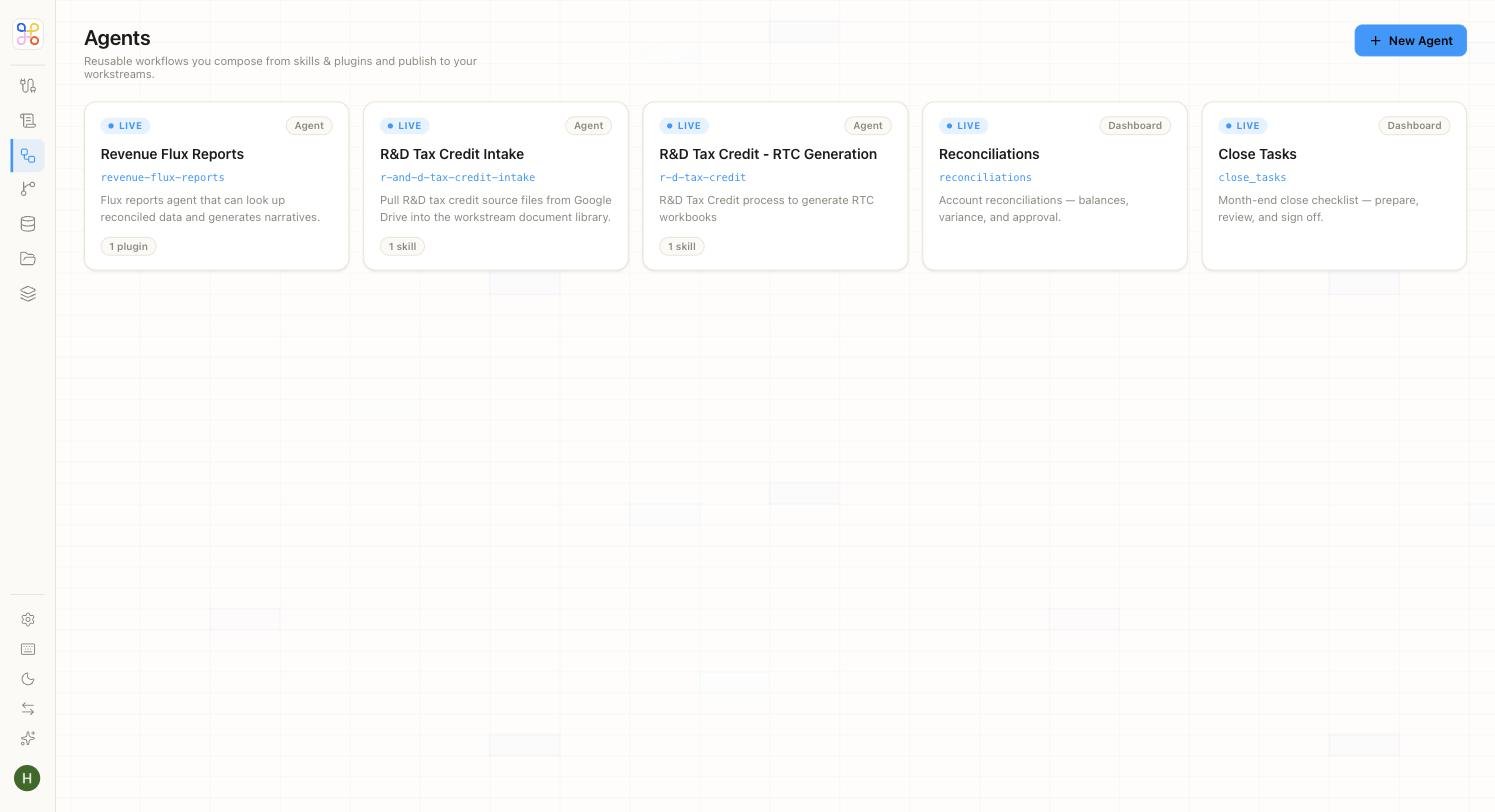
- What the agent does — its instructions and the skills it’s allowed to use.
- Who can see what — which people access the client, and what the agent is allowed to read.
- When it runs — the schedule, and who reviews the output.
The pipeline you’re assembling
Principles worth internalizing
- Isolation lives on the Workstream (client). Don’t try to enforce separation anywhere else; scope data and access to the client and it’s guaranteed.
- Skills declare capability, not access. Enabling a skill lets the agent use it; it doesn’t widen what data the agent can see. Access is separate.
- The review gate is always on. You configure reviewers, not whether review happens.
- Templates carry complexity. For a common process, a task template already encodes good instructions and skills — start there and adjust.